
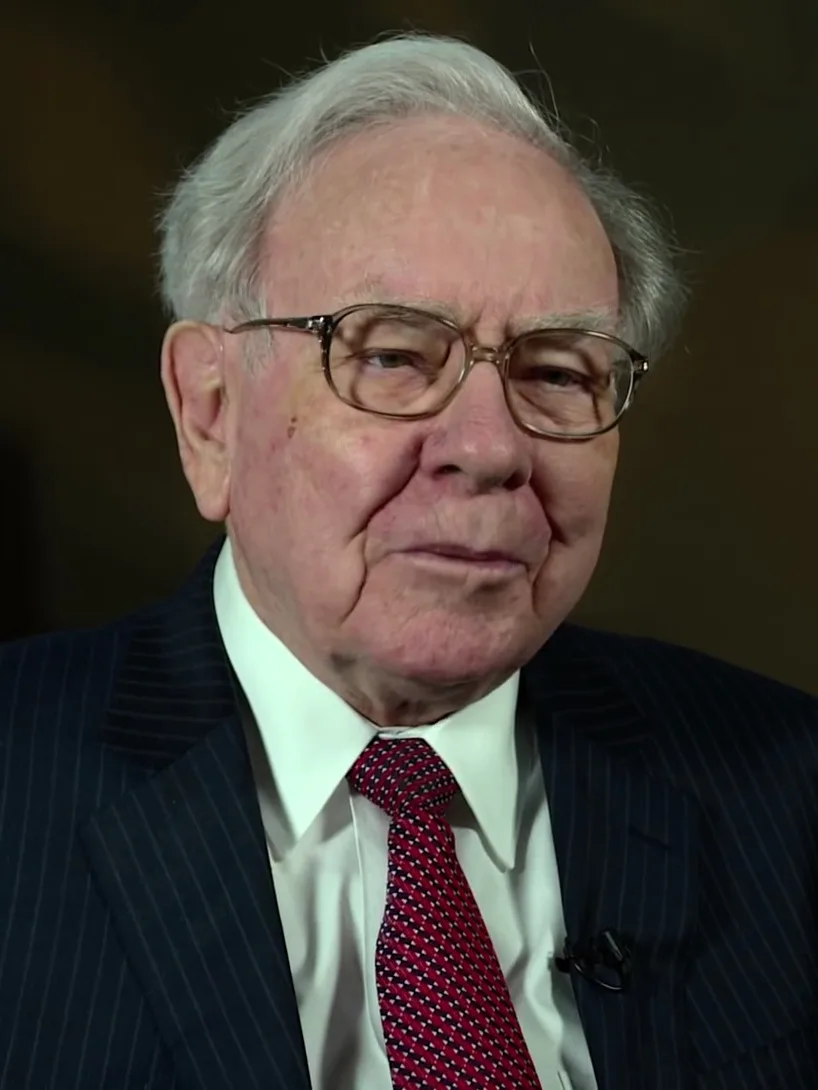
It began with a failing textile mill. Warren Buffett turned Berkshire Hathaway into a holding company that owns insurers, railroads, utilities and consumer brands outright, and runs an equity portfolio the whole market reads for signals. No investor of the modern era has a record close to it.
The method came from Benjamin Graham and was sharpened over decades with Charlie Munger, and it sounds almost too plain to work. Buy good businesses with durable advantages at sensible prices. Then keep them. He skipped every fad he could not explain and treated panics as sales rather than emergencies.
His edge was never a secret formula. It was the temperament to do nothing while everyone else panicked.
Temperament did as much work as analysis. Patience, frugality, a deep suspicion of leverage and of anything requiring hype to make sense. His shareholder letters and the annual meeting turned corporate governance into public education, and pulled tens of thousands of people to Omaha every year to hear it.
With more of the work now passed to his successors, one question remains. Does the discipline outlive the man who set it? His own answer was to build an institution rather than a following — which is, in its way, the longest-term investment he ever made.
Buffett bought his first stock at eleven. He studied under Benjamin Graham at Columbia Business School, worked for Graham's firm in New York, and then returned to Omaha to run his own investment partnerships from 1956. They beat the market for more than a decade before he wound them up in 1969 and concentrated on Berkshire, whose shares he had started buying in 1962.
Insurance was the engine. Starting with National Indemnity in 1967, and later GEICO, Berkshire collected premiums before it paid claims, and Buffett invested that float. It allowed him to buy whole businesses, among them See's Candies, BNSF Railway and what is now Berkshire Hathaway Energy, while holding large stakes in public companies such as Coca-Cola, American Express and, later, Apple.
He has pledged to give away more than 99 per cent of his wealth, much of it through annual gifts to the Gates Foundation, and in 2010 he co-founded the Giving Pledge with Bill and Melinda Gates. Charlie Munger died in 2023, weeks short of his hundredth birthday. In May 2025 Buffett told the annual meeting he would step down as chief executive at the end of that year, with Greg Abel succeeding him.