
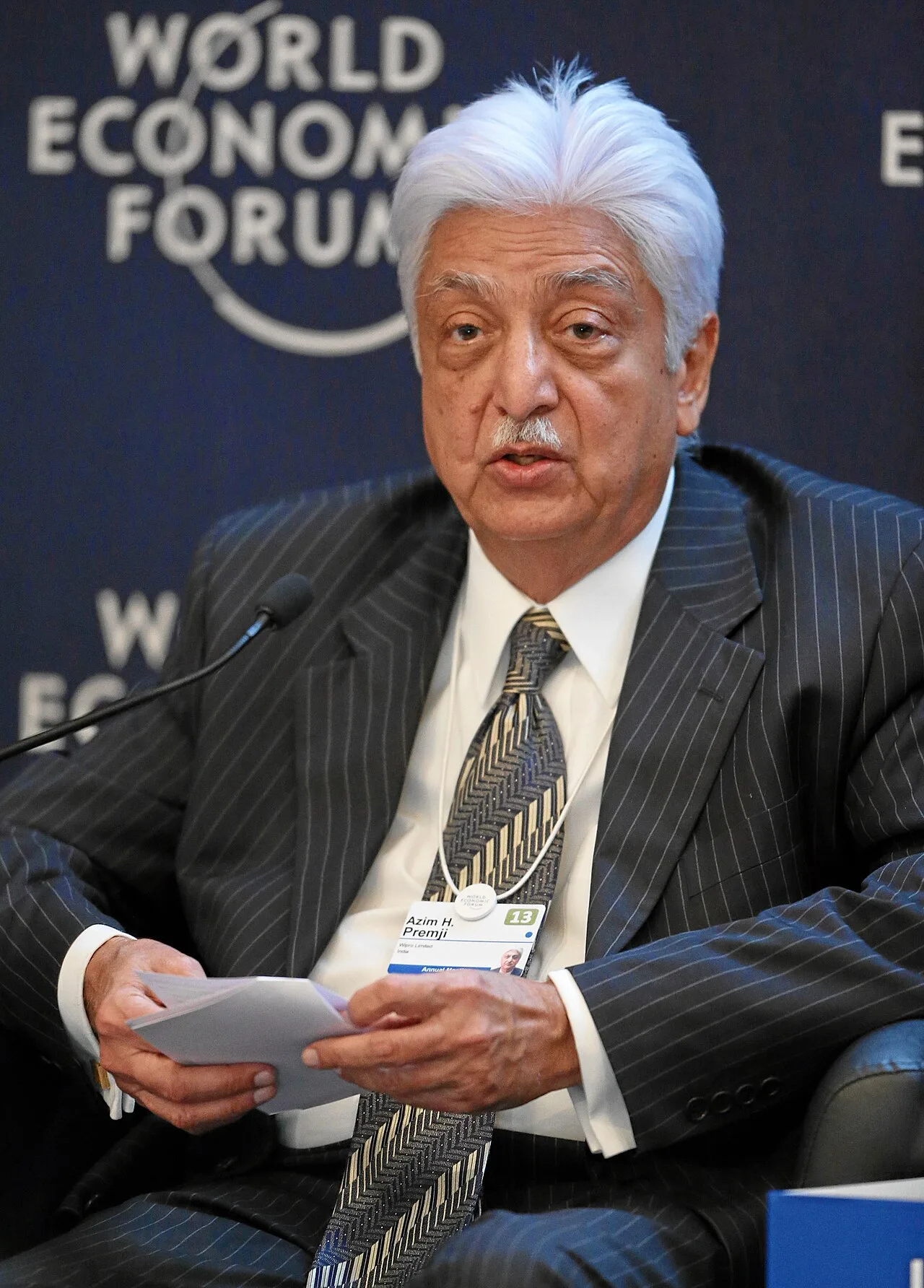
His father died in 1966 and Azim Premji, then still a student, came home to run a vegetable-oil company. He turned it into Wipro. The pivot from cooking oil to computing is one of the odder routes to building a global technology-services firm, and it worked.
He was frugal in a way that became legend inside the company, and inflexible about ethics in a way that cost real business. Wipro did not pay bribes. In the India of that period, that was not a slogan — it meant losing contracts and saying so out loud.
He treated his fortune as a trust to be deployed, not a trophy to be displayed.
The philanthropy is the larger legacy. Through the Azim Premji Foundation he has committed the great majority of his fortune to Indian education, which makes him one of the most significant private givers anywhere in the developing world.
Billions have gone into schools, teacher training and a university carrying his name. What that changed, beyond the classrooms, is the expectation. A generation of wealthy Indian founders now has to answer a question Premji made unavoidable: what is the money actually for?