
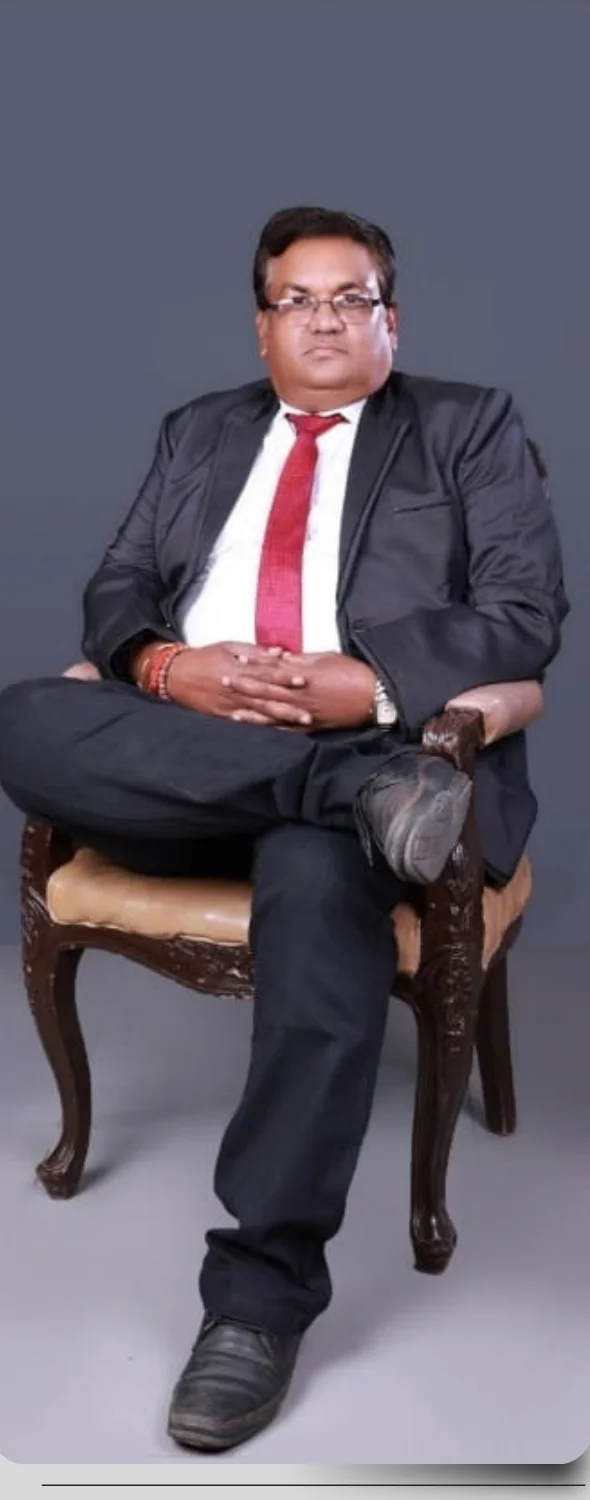
For Dr. Ashok Pandey, education has never been limited to classrooms, examinations or academic results. His journey reflects a wider belief that education can create opportunity, build confidence and contribute to the development of society. Born on 24 June 1972 into a modest, values-driven family, Ashok grew up with strong lessons in simplicity, discipline and integrity from his parents, Ambika Prasad Pandey and Nirmala Pandey — and a rural upbringing that exposed him early to the difficulties faced by families with limited access to quality education.
From classroom teacher to institution builder
His professional journey began in education as a teacher, working closely with students in a way that convinced him education should go beyond textbooks and examinations — helping young people develop confidence, character, responsibility and the ability to think independently. As his experience grew, he began to recognise the wider gaps that existed in education, particularly in smaller towns and communities where opportunities were limited. With limited financial resources but a clear purpose, he began establishing educational institutions that could provide structured, accessible learning.
What started on a modest scale gradually developed into institutions serving students at different levels. Today, Dr. Ashok Pandey serves as Chairman and Managing Director of Drona Public School and Drona College, having developed an educational environment that combines academic learning with discipline, values and practical development.
Education as preparation for life
Over the years, he has been associated with initiatives connected to health awareness, environmental responsibility and community development, and his involvement with media and journalism has provided another platform for engaging with social issues. He has also adapted his institutions to changing times, incorporating technology and newer teaching approaches while maintaining an emphasis on discipline, values and personal development. His wife, Meenu Pandey, has supported his vision and been involved in educational and institutional activities.
Education becomes truly meaningful when knowledge is combined with values, opportunity and responsibility.
Building schools in India's smaller towns
Private school founders working outside India's metro clusters face a structurally different set of challenges than those building in Delhi, Mumbai or Bengaluru. Land and construction costs are lower, but so is the density of paying households able to afford private schooling, which means institutions in tier-2 and tier-3 towns typically grow through years of reinvested surplus rather than external capital — closer to how Dr. Pandey describes starting Drona Public School and Drona College with limited financial resources. This bootstrapped model has historically produced a distinctive category of Indian private education: chairman-led institutions where the founder remains personally involved in academic policy and campus life well beyond the school's early years, rather than schools run at arm's length by a separate management trust.
The sector has also faced growing pressure to modernise — state and central education policy under NEP 2020 has pushed schools of all sizes toward skills-based and technology-integrated learning, which smaller-town institutions often adopt more slowly due to infrastructure and teacher-training constraints. Chairmen who, like Dr. Pandey, began as classroom teachers before moving into institution-building tend to bring a first-hand read of what changes are actually implementable at the classroom level, rather than policy adopted for its own sake.
Sources and editorial references
This profile is adapted from Dr. Ashok Pandey's featured profile in the September 2026 print edition of Global Cover Story, based on a self-submitted account and photographs. Career history and dates reflect the subject's own account and have not been independently verified.