
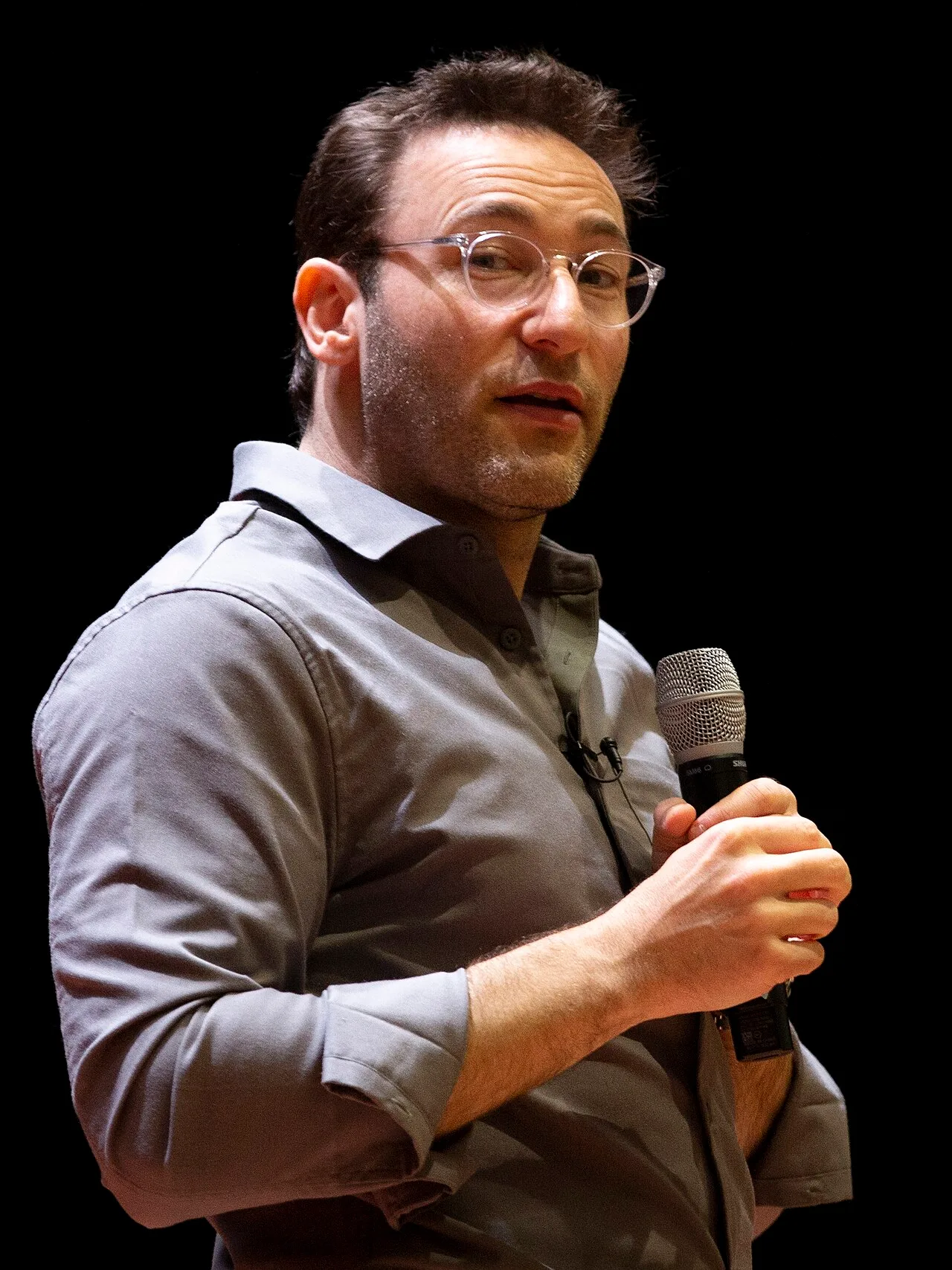
You have probably seen the talk. A man paces a small stage, draws three circles on a whiteboard, and quietly rewires how millions of people think about leadership. That man is Simon Sinek, and the idea — start with why — has outlived almost every management fad that came after it.
What makes Sinek land isn't complexity. It's the opposite. He takes something we all feel but rarely name — that we follow leaders and brands who stand for something — and gives it a shape simple enough to remember on a Monday morning. Purpose first. Then how. Then what.
People don't buy what you do, he says. They buy why you do it. Simple to say. A lifetime to live.
His work on trust, safety and what he calls the 'infinite game' has quietly reshaped how good managers show up: less about hitting the quarter, more about the people who have to hit it with you. It is unfashionably patient advice in an impatient world.
The reason he owns your LinkedIn feed isn't the follower count. It's that his message survives the scroll. In a place built for humble-brags and hot takes, Sinek keeps saying the same warm, stubborn thing — lead like people matter, because they do.
Sinek spent parts of his childhood in South Africa, England and Hong Kong before his family settled in the United States. He studied cultural anthropology at Brandeis University and worked in advertising in New York before starting his own consultancy. His talk 'How Great Leaders Inspire Action', given at TEDxPuget Sound in 2009, became one of the most watched TED talks of all time.
Start With Why was published the same year, and the books that followed extended the idea. Leaders Eat Last, in 2014, argued that people do their best work when leaders make them feel safe, drawing on his time with the US military. The Infinite Game, in 2019, borrowed a concept from the philosopher James Carse to argue that business has no finish line, so leaders should play to stay in the game rather than to beat a rival this quarter.
Critics say the golden circle simplifies how companies actually succeed, and that purpose statements are easy to write and hard to live by. Sinek has responded by putting more weight on behaviour: his recent work centres on trust, friendship and the skills of listening, and his podcast, A Bit of Optimism, carries those themes into conversations with people well outside business.