
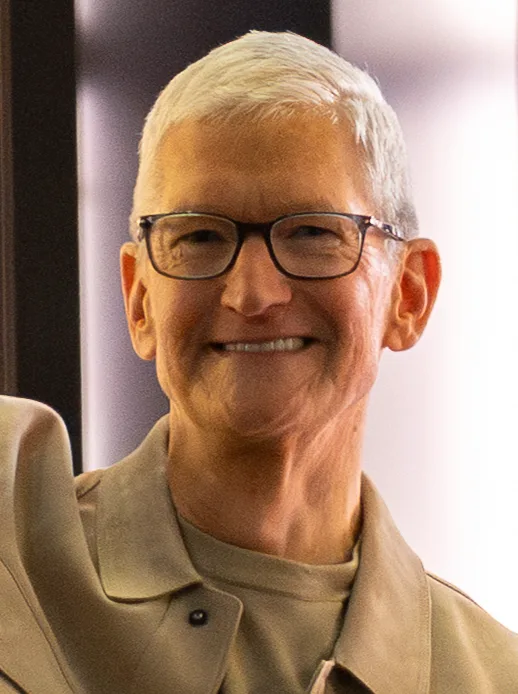
Following Steve Jobs was the hardest job in business, and Tim Cook took it in 2011. He did not attempt the showmanship. What he brought instead was the thing Apple actually needed by then: mastery of an immense supply chain, operational discipline, and the patience to run a decade rather than a quarter.
Apple crossed a trillion dollars under him, then several. The iPhone did most of the lifting, but services grew into a business large enough to matter on its own, and the Watch and AirPods turned wearables from an accessory line into a category Apple owns.
Jobs designed the products. Cook designed the machine that could make a billion of them, flawlessly, every year.
He also gave the company a public position — privacy, environmental commitments, an ecosystem so tightly stitched that leaving it costs something. Manufacturing at scale in China had to be managed as diplomacy as much as logistics, and production has slowly begun to spread elsewhere.
The criticism is fair enough: a superb optimiser rather than an inventor, with new categories arriving late and carefully. The rebuttal is the balance sheet. Cook built the most profitable consumer-hardware business in history, which is its own kind of creative act.