
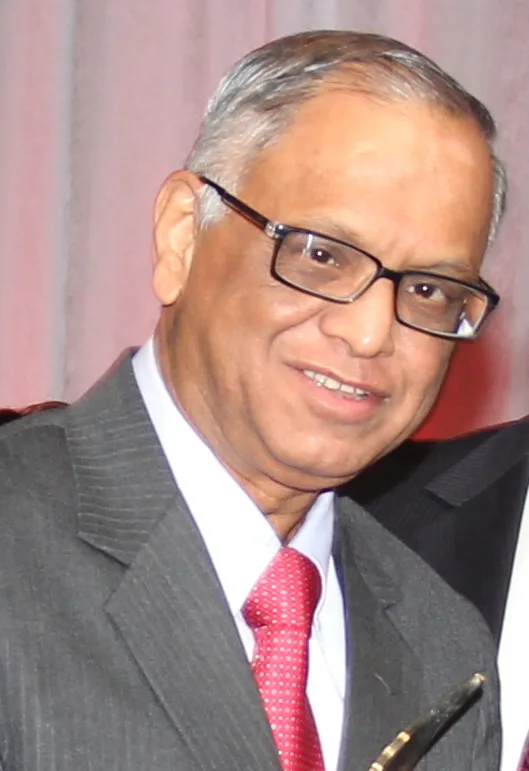
Seven men. 1981. Capital scraped mostly from their own savings. That was Infosys at the start, and it became the flagship of Indian IT services — the clearest case study anyone has of how the country attached itself to the global economy.
The mechanism was the Global Delivery Model: do the high-value software work in India, for clients anywhere. It sounds obvious in retrospect and was not obvious then. The 1993 listing, and later a listing on a US exchange, announced that Indian technology firms had arrived and intended to stay.
Compassionate capitalism, he called it: create wealth legally and ethically, then share its benefits widely.
Murthy's insistence on governance, transparency and merit was genuinely unusual in the business culture he operated in. Compassionate capitalism was his phrase for it — create wealth legally and ethically, then spread the benefit rather than hoard it.
He has since become the elder statesman of Indian entrepreneurship, mentoring founders and wading into national arguments about productivity, education and how much anyone should work. Infosys remains the benchmark that Indian technology ambition still gets measured against.