
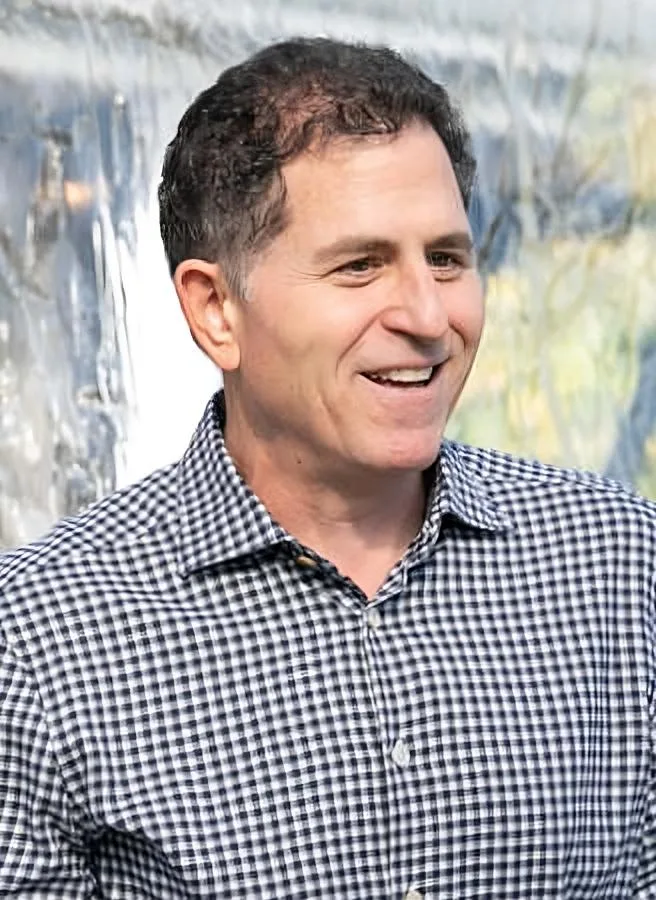
A dorm room in 1984. Michael Dell started selling computers built to order and shipped direct, cutting out the retailer entirely, and the personal-computer industry never quite recovered its old shape. He became one of technology's youngest self-made billionaires on that model alone.
Then the PC market matured, which is a polite way of saying the growth stopped. His response was drastic: take the company private in one of the largest such deals ever done, and rebuild it away from quarterly scrutiny.
He took his own public company private to fix it away from the market's glare — then brought it back stronger.
The rebuild ran through EMC. Buying the data-storage giant turned Dell into a broad enterprise-technology group — servers, storage, software, services — and only then did the company return to public markets.
From disruptive upstart to elder statesman of enterprise computing is a long arc, and the interesting part is the middle. He was willing to make an enormous financial bet purely to control the company's own direction.
Dell grew up in Houston and was upgrading and selling computers from his dormitory at the University of Texas at Austin when he founded PC's Limited with about 1,000 dollars. He left university to run it, renamed it Dell Computer and took it public in 1988. In 1992 he became the youngest chief executive of a Fortune 500 company.
He stepped down as chief executive in 2004 and returned in 2007 as the business lost ground. The 2013 buyout with Silver Lake, valued at about 25 billion dollars, was fought by the activist investor Carl Icahn. The EMC deal, completed in 2016 for about 67 billion dollars, was then the largest technology acquisition ever and brought a controlling stake in VMware, which Dell spun off in 2021.
Dell Technologies returned to the stock market in 2018. Its server business has since grown with demand for AI computing, supplying systems built on Nvidia chips to cloud providers and large companies. Through the Michael & Susan Dell Foundation, he and his wife have given heavily to education, health and family economic stability.