
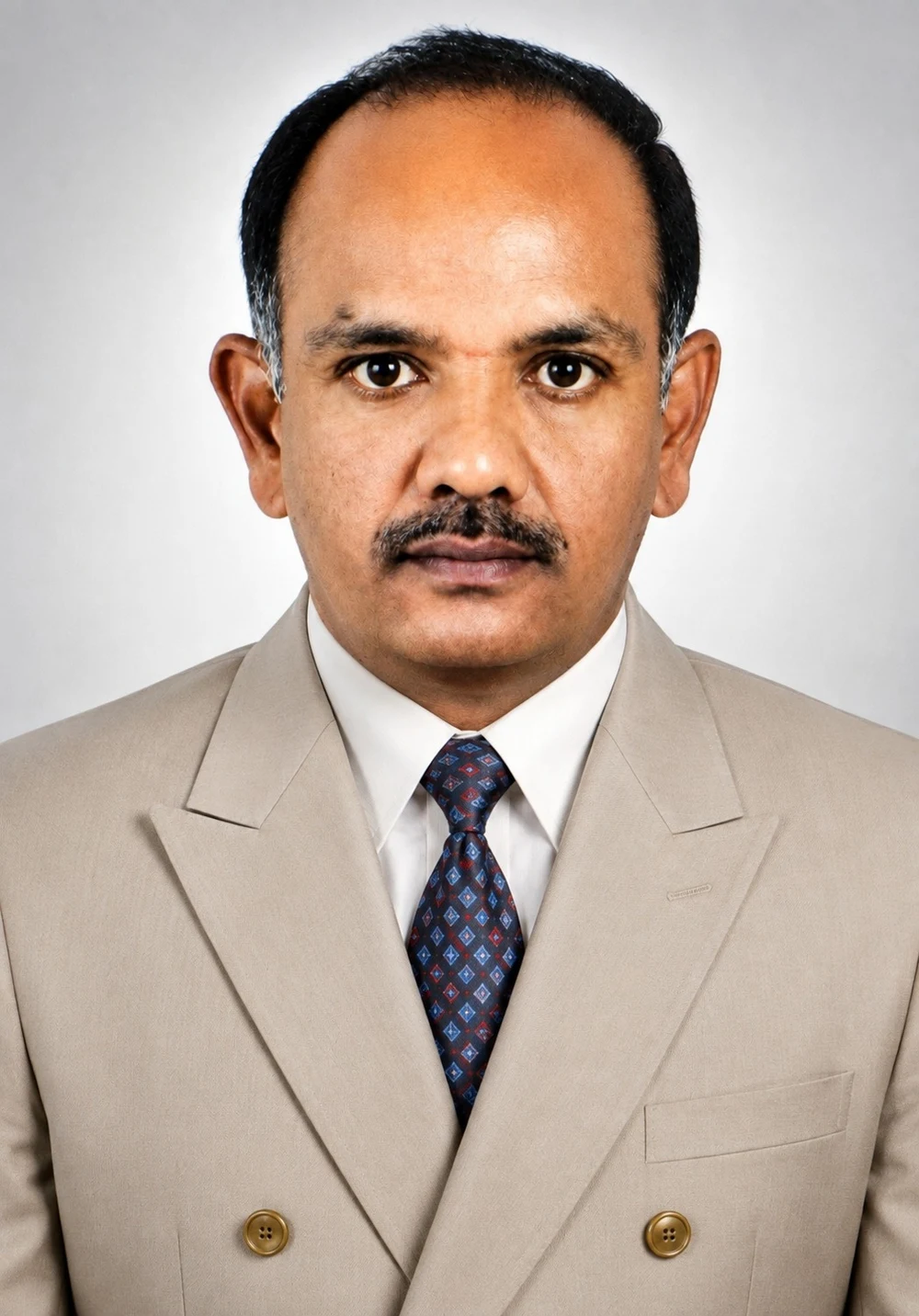
Industrial innovation often begins with a simple question: can an existing process be made cleaner, more consistent and easier to scale? The technical work associated with I.V. Subba Rao explores exactly this possibility through the development of a continuous rotary kiln process for transforming natural quartz into cristobalite-rich silica — without the use of conventional chemical fluxes or external mineralizers.
A flux-free route to cristobalite
Cristobalite is a high-temperature form of silica with applications across several advanced industries, including ceramics, refractories, glass, coatings, dental materials and electronic materials. The challenge lies in converting natural quartz into a highly crystalline cristobalite product while maintaining control over purity, phase composition and process consistency.
The study focuses on a flux-free continuous rotary kiln route developed by Raghuvamsi Technologies, India. Instead of depending on alkali fluxes, chemical catalysts or mineralizers, the process relies on carefully controlled thermal treatment. This makes temperature management, heating rate, residence time and material movement central to the overall transformation.
From natural quartz to cristobalite-rich silica
The process begins with high-purity natural quartz or silica-rich feed, typically within a size range of around 3 to 30 millimetres. Where necessary, pretreatment can be used to reduce impurities such as iron oxide, titanium dioxide and aluminium oxide. Once prepared, the material moves through different thermal zones of the rotary kiln, including preheating, reaction and high-temperature sintering stages.
At temperatures reported at approximately 1700 to 1750 degrees Celsius, the quartz structure undergoes a solid-state transformation, with the arrangement of silica gradually changing towards the cristobalite structure. Achieving this transformation consistently requires careful control, because unwanted intermediate phases can form when the heating conditions or residence time are not properly managed.
| Parameter | Detail |
|---|---|
| Feed material | High-purity natural quartz / silica-rich feed, ~3–30 mm |
| Process route | Continuous rotary kiln (flux-free, no mineralizers) |
| Process temperature | ~1700–1750°C |
| Kiln stages | Preheating, reaction, high-temperature sintering |
| Developed with | Raghuvamsi Technologies, India |
What the X-ray diffraction showed
One of the most significant findings of the work comes from X-ray diffraction analysis. The investigated material showed approximately 90 percent alpha cristobalite along with around 10 percent residual low quartz. No significant detectable amorphous or glassy phase was reported, and the absence of detectable tridymite in the reported pattern further supports the effectiveness of the controlled thermal approach.
The resulting material demonstrates a dense and fine-grained crystalline structure, with improved particle bonding and compositional uniformity. Reduced colouring impurities also contribute to better brightness, making the material suitable for applications where surface and optical quality matter.
Why this matters for advanced industries
The potential applications of this technology extend across a wide industrial spectrum. Cristobalite produced through this route may find use in refractories, advanced ceramics, dental ceramics, specialty glass, paints and coatings, thermal insulation systems, foundry and investment casting materials, semiconductor and electronic composites, photovoltaic and solar applications, aerospace and other high-temperature technologies.
Built for scale
What makes this work particularly relevant is its focus on scalability. Laboratory success is important, but industrial technology must also deliver consistency, process control and repeatability at a larger scale. A continuous rotary kiln offers a practical framework for achieving these objectives while avoiding the additional chemicals commonly associated with flux-assisted processes.
What's next
The study also recognises that further optimisation remains possible. Residual quartz indicates that complete transformation is not yet achieved in every particle, and improvements in heat transfer and particle-core conversion could further increase phase uniformity.
The work connected with I.V. Subba Rao represents an important step towards converting an abundant natural mineral resource into a higher-value engineered material. By combining mineralogical understanding, thermal control, process engineering and structural verification, the study presents a practical direction for the future of advanced silica processing. At its core, the innovation is not simply about producing cristobalite — it is about developing a controlled, additive-free and potentially scalable process that can support the growing demand for high-performance silica-based materials across modern industry.
Sources and editorial references
This profile is based on a self-submitted technical account and photographs provided by I.V. Subba Rao for editorial feature, describing a flux-free cristobalite process developed with Raghuvamsi Technologies, India. Process parameters, XRD findings and claimed outcomes reflect the submitted material and have not been independently verified or peer-reviewed by Global Cover Story.