
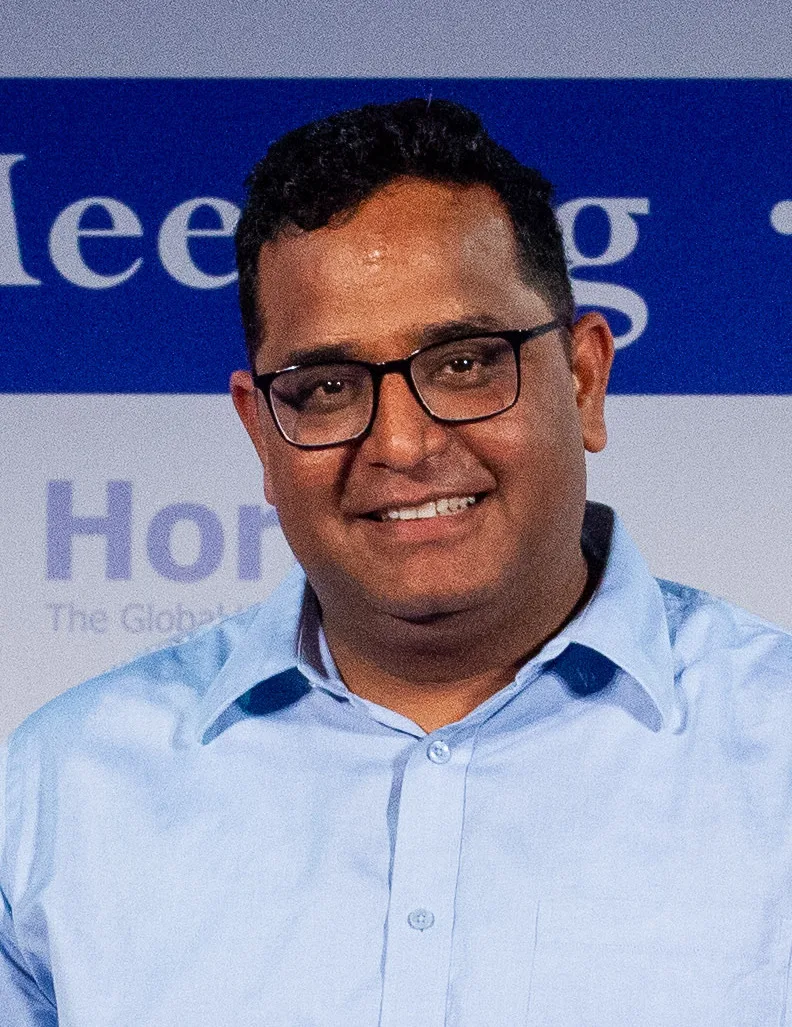
Paytm made Vijay Shekhar Sharma the face of Indian fintech. Smartphones were spreading, and then in November 2016 demonetisation emptied the country's wallets overnight and pushed millions of people onto digital payments in a matter of weeks. Few founders have ever caught a wave that size.
The company became a full financial-services platform — payments, commerce, lending — backed by marquee global investors, with a brand so ubiquitous that 'Paytm karo' entered the language. Its listing was among the largest India had seen.
He wanted payments to be as ordinary as breathing. For a while, an entire country moved to his rhythm.
What followed was harder. The share price fell steeply after listing, regulators tightened around parts of the business, and both the company and its founder had to prove they could operate under scrutiny. Profitability and compliance replaced growth as the things that mattered.
His arc is Indian fintech's arc in miniature. A founder from a small town helps normalise digital money for a billion people, then has to demonstrate the business still works once the era of growth at any cost ends.
Sharma grew up in Aligarh, Uttar Pradesh, the son of a schoolteacher, and studied at the Delhi College of Engineering, where he has said he struggled at first because his schooling had been in Hindi. He founded One97 Communications in 2000, selling mobile content such as news, cricket scores and ringtones through telecom operators. Paytm began in 2010 as a site for prepaid mobile recharges.
Alibaba's Ant Financial invested in 2015 and SoftBank in 2017, giving Paytm the capital to build a wallet, a payments bank and a large network of QR-code merchants. The November 2021 public offering raised about 18,300 crore rupees, at the time the largest in Indian history, but the shares opened below the issue price and fell much further in the months that followed.
In January 2024 the Reserve Bank of India ordered Paytm Payments Bank to stop taking new deposits, citing persistent compliance failures, and Sharma stepped down as its chairman the next month. The parent company moved customers to partner banks and refocused on merchant payments and loan distribution. By 2025 it was reporting quarterly profits, a turnaround that now has to hold without the bank.