
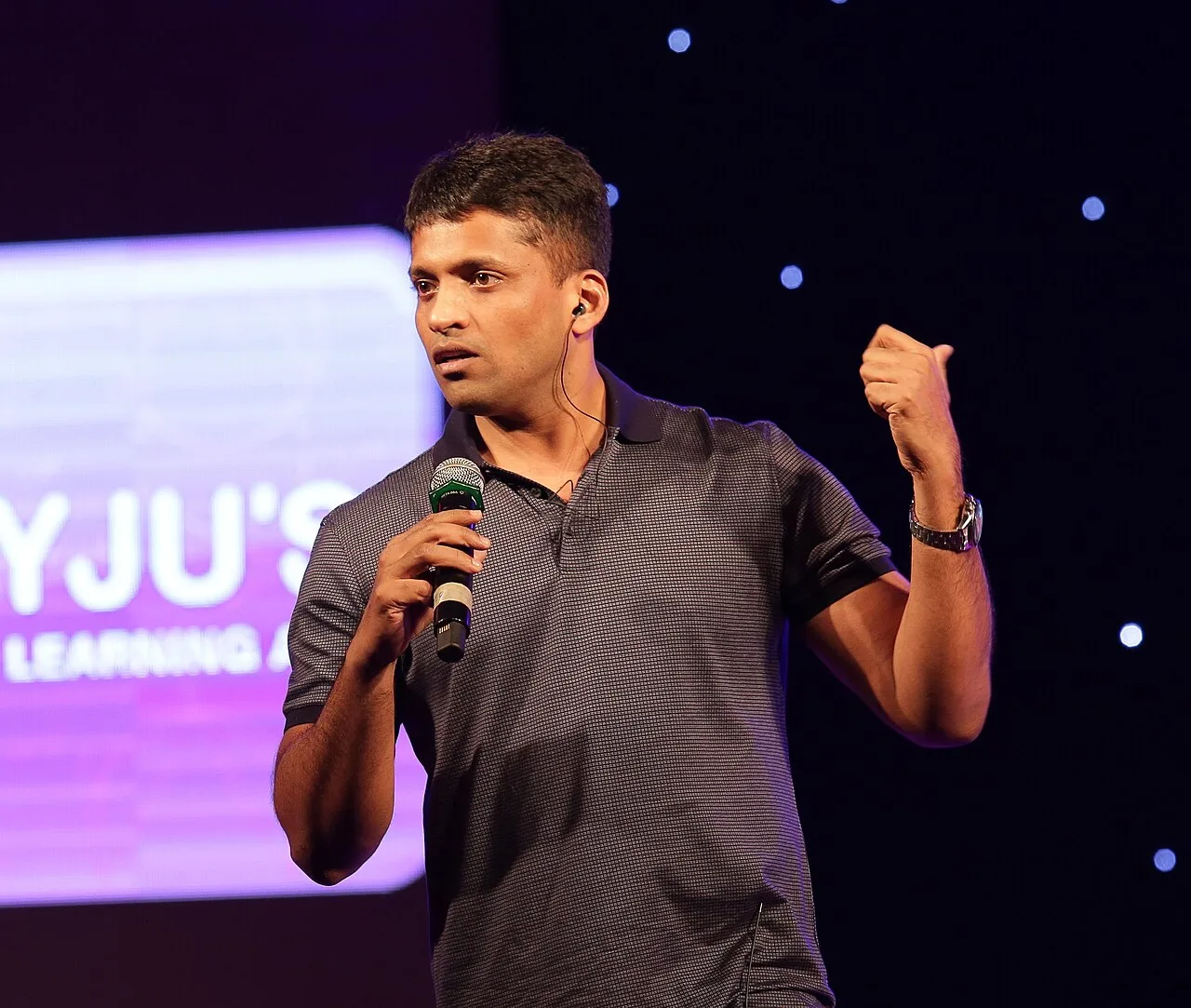
He was a teacher first. Byju Raveendran co-founded the edtech company that carried his name, caught a surge in demand for online learning, and for a while ran India's most valuable startup with a roster of blue-chip global investors behind him.
Growth was the strategy and there was no second one. Byju's bought companies across several continents and spent enormous sums on marketing and sponsorships, chasing a vision of owning digital education worldwide.
It is the defining cautionary tale of the funding boom: valuation is a promise, not a proof.
Then it came apart, fast. Disputes with investors and lenders. Questions about the accounting and the governance. A valuation in freefall, and insolvency proceedings at the end of it.
His arc is now the cautionary tale of India's startup decade, told in every pitch meeting. Cheap capital and a rising paper valuation feel like proof of something. They are not a substitute for unit economics that work or governance anyone can inspect.
Raveendran grew up in Azhikode, Kerala, where both his parents were teachers. He studied engineering and worked as a service engineer for a shipping firm before he started coaching friends for the CAT management entrance exam. The classes grew into stadium-sized sessions, and in 2011 he and his wife, Divya Gokulnath, founded Think and Learn, the company behind Byju's. The learning app launched in 2015.
Its fastest growth came during the pandemic, when schools closed and the company spent heavily on acquisitions, including the coaching chain Aakash Educational Services for close to a billion dollars in 2021 and the US reading platform Epic. Byju's became the Indian cricket team's jersey sponsor in 2019 and an official sponsor of the 2022 FIFA World Cup. At its peak in 2022 it was valued at about 22 billion dollars.
The unravelling played out in courts on several continents. Its auditor, Deloitte, resigned in 2023 over delayed financial statements, and US lenders to a 1.2-billion-dollar term loan pursued the company in Delaware. In 2024 an Indian tribunal admitted insolvency proceedings brought by the Board of Control for Cricket in India over unpaid sponsorship dues, and Raveendran has since been fighting creditors and investors over control of what remains.