
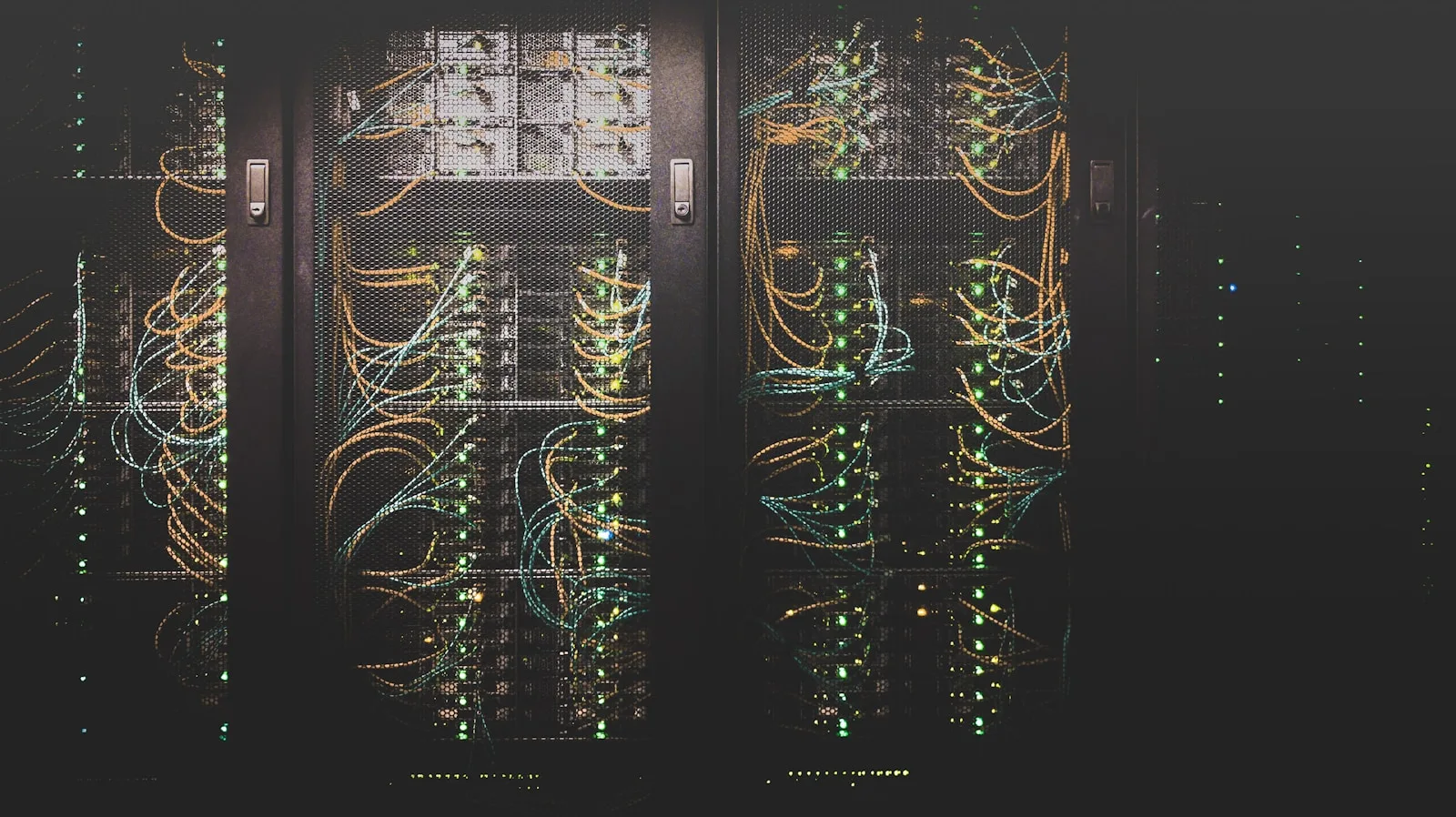
Sovereignty used to be measured in borders, armies and barrels of oil. The measure is moving. Owning the data matters less than owning the thing that reads it, and the countries that understand this are now spending accordingly. Sovereign AI is the name for that spending: strategic autonomy over the intelligence that will run an economy, a military and a welfare state.
For most of the world AI arrived as a consumer product, rented from a handful of companies in one American state. That was tolerable while the technology mostly chatted. It is a different proposition once agents start operating things — a national health system, a power grid. Dependency stops being a procurement question and becomes a security one. The provider can change the terms, raise the price, or simply stop serving you, and none of those decisions are yours.
| Pillar | Objective | Key Component |
|---|---|---|
| Compute | Physical Independence | Sovereign GPU Clusters / Local Data Centers |
| Data | Information Control | National Datasets / Data Residency Laws |
| Models | Cognitive Autonomy | Indigenous LLMs / Open-Weight Models |
| Norms | Cultural Alignment | Local Ethics / Linguistic Representation |
The 'Choke Point' Problem: The US-China Duopoly
The map today is bipolar. The United States and China hold most of the frontier models and most of the compute. Everyone else inherits a choke point, and a country that rents its AI infrastructure from one foreign supplier has outsourced something closer to cognition than to hosting.
The GPU wars made this legible. Export controls on high-end chips turned into an instrument of foreign policy, and any nation whose capacity to innovate sat downstream of another country's export law learned what that was worth. Hence the scramble for fallback capacity — domestic alternatives that keep critical systems running if the supply chain is cut.
Sovereign AI is not about isolationism; it is about ensuring that the cost of dependence does not exceed the value of the technology.
Strategic Autonomy: The Middle Power's Playbook
Since complete autarky is impossible, 'middle powers'—nations like India, France, and the UAE—are adopting a strategy of 'Managed Interdependence.' They use a framework of 'Control, Steer, and Depend' to navigate the AI era:
- **Control:** The state maintains absolute command over 'Critical AI'—systems used for national security, law enforcement, and core infrastructure.
- **Steer:** Using regulatory power (like the EU AI Act) and procurement rules to force foreign providers to align with national standards and values.
- **Depend:** Strategically managing reliance on frontier models for non-critical tasks, while diversifying providers to avoid vendor lock-in.
Case Studies in Sovereignty
Each country plays the hand it holds. India's hand is **Digital Public Infrastructure**. The Sovereign AI Stack takes the rails that already serve a billion people and builds purpose-made models on top of them — BharatGen and others, trained for a society that speaks dozens of languages. Sovereignty here is defined as reach.
The UAE has **capital**, and is using it. Billions into Falcon and Jais, an attempt to start a domestic AI industry from the top down rather than wait for one to grow. The ambition is to be a research hub — buy the talent, build the ecosystem next to the frontier, and be indispensable enough that isolation never arrives.
France went for **rules and open weights**. Backing Mistral AI is a bet that no single company should own a nation's intelligence layer, and that weights anyone can inspect are safer than weights nobody can. Sovereignty, in the French reading, means auditable — and aligned with European values rather than someone else's.
| Nation | Primary Lever | Key Asset |
|---|---|---|
| India | DPI & Scale | Sovereign AI Stack / Bhashini |
| UAE | Capital & Ambition | Falcon / G42 |
| France | Regulation & Openness | Mistral AI / Jean Zay |
The Energy-AI Nexus: The New Resource War
The part that gets least attention is the wall made of electricity. Training and serving a sovereign model can consume more power than a city does. That makes energy policy into AI policy, and it quietly advantages whoever already has stable, cheap, clean supply — France with its nuclear fleet, the UAE with its solar.
Which means the winning strategies will not be decided on chips and datasets alone. They will be decided on how well a grid and a data centre are planned together. Green compute is turning into a recruiting pitch for AI talent and, increasingly, a line item in national security.
Strategic Takeaways for Global Businesses
- Diversify Your Model Layer. Do not rely on a single provider for your core intelligence. Use a multi-model strategy that includes both closed-source and open-weight alternatives.
- Understand Data Residency. Sovereign AI is driving a wave of new data laws. Ensure your AI architecture can handle 'local-first' data processing to avoid regulatory friction.
- Align with National Roadmaps. If you are operating in a country with a strong sovereign AI push (like India or France), align your product roadmap with their national AI mission to gain preferential access to compute and data.
- Invest in 'Sovereign' Infrastructure. For high-stakes enterprise work, consider deploying models on your own private cloud or sovereign cloud providers to avoid the risk of external choke points.
The Horizon: Federated Intelligence
The destination most policymakers describe is not a wall. It is federation: national models that cooperate, drawing on a shared body of knowledge while keeping data, values and security under local control. One monolith owned by a few, replaced by many modules governed by many.
Underneath all of it sits a simple recognition. Intelligence has become the century's most valuable resource, and reasoning is being industrialised the way weaving once was. Countries that rent it will get a version someone else decided they should have. That is why this argument is never really about chips.
Sources and editorial references
This analysis is based on reports from the Carnegie Endowment for International Peace, Brookings Institution, the Observer Research Foundation (ORF), and technical whitepapers on AI sovereignty and the 'Control, Steer, Depend' framework.
- Carnegie Endowment — Early Lessons in Sovereign AI: carnegieendowment.org
- Brookings — Is AI Sovereignty Possible?: brookings.edu
- ORF — A Strategic Approach to AI Sovereignty: orfonline.org
- ThinkByMore — Sovereignty in the Age of AI: thinkbymore.com