
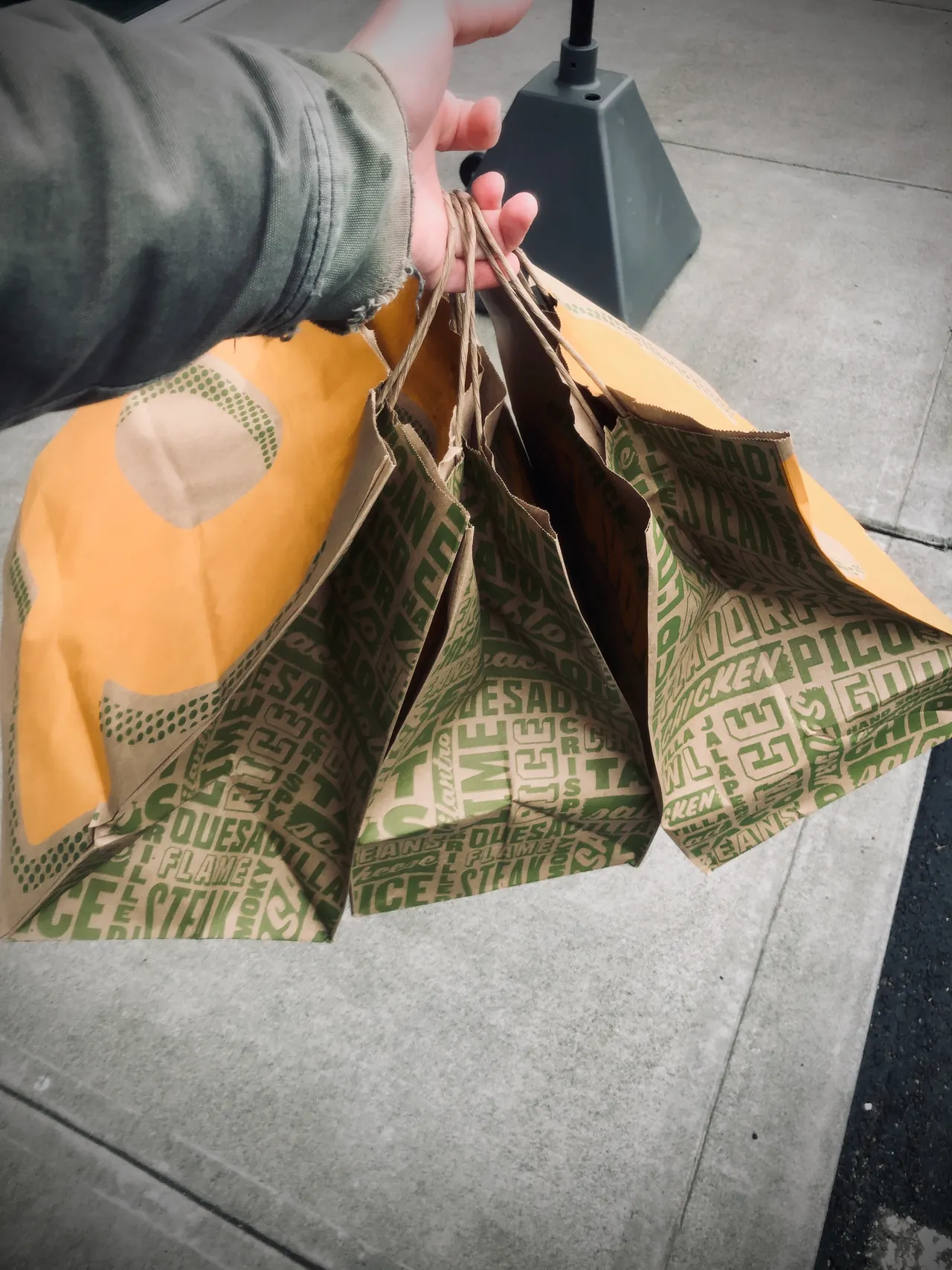
To the customer it is milk, a charger or a bag of chips at the door in under ten minutes, and it feels like a trick. To the operator those ten minutes are an arithmetic problem with almost no slack in it. The trick is wearing off in 2026, and what is left is the unit economics underneath.
India's market — Zepto, Blinkit, Swiggy Instamart — is out of its growth-at-all-costs years. The deep discounts are gone and so is the tolerance for burning venture money to buy orders. What replaced that phase is harder: a race for margins that hold. The paradox is unchanged. The service has to stay absurdly convenient and start being properly profitable.
| Player | Core Strategy | Economic Lever | Current Status |
|---|---|---|---|
| Blinkit | Scale & Infrastructure | 1P Inventory & Ad-Rev | Closest to sustainable profit |
| Zepto | Hyper-Density & Volume | Order Throughput | High growth, scaling for IPO |
| Instamart | Ecosystem Synergy | Cross-platform User Base | Leveraging Swiggy's logistics |
The Dark Store: The Engine of the 10-Minute Promise
Ten-minute delivery is not won by a faster bike. It is won inside the warehouse. The dark store is the atom of this business: closed to the public, laid out for one job, which is picking an order and handing it to a rider inside about two minutes. Every aisle is arranged around that number.
After that it is a density problem. Site the store too far out and delivery times slip while riders idle. Make it too small and it runs dry at peak. So operators pack stores into the busiest urban pockets and squeeze orders out of every square foot. A dark store generally needs something north of 2,500 orders a day to make money, and hitting that requires a level of precision most retail has never had to manage.
In quick commerce, the last mile is the most expensive mile. The only way to win is to make that mile as short as possible.
The Unit Economics Struggle: The Cost of Convenience
Scale has not made the economics safe. Every order is a contest between average order value and the cost of fulfilling it. In the early years the platforms lost ₹100 or more on each one and venture capital covered the difference. The gap has narrowed since. The structural costs have not gone anywhere.
Rider payouts, dark store rent and electricity add up to roughly ₹90 to ₹120 an order. Three levers push back: charge for delivery, raise the threshold for free delivery, and change what is in the basket. That third one matters most. Groceries carry thin margins; electronics, beauty and lifestyle goods do not, and every one of them dropped into a basket lifts both the order value and the contribution left at the end.
| Component | Impact on Margin | Strategic Goal |
|---|---|---|
| Delivery Fee | Direct Revenue | Cover the 'last-mile' cost |
| Ad Revenue | High Margin Offset | Subsidize the delivery cost |
| 1P Inventory | Higher Gross Margin | Avoid marketplace commissions |
| AOV Increase | Lower Relative Cost | Shift to high-value categories |
The real change in 2026 is retail media. These apps have quietly become advertising businesses that also deliver groceries. Brands pay well for the top of a search result or a banner on the home screen, and that money arrives with almost no cost attached to it. It is the line item doing most of the work of dragging the sector toward positive EBITDA.
The Strategic Divergence: Zepto vs. Blinkit vs. Instamart
Same destination, three different roads. Blinkit, inside Zomato, has chosen predictability — heavy investment in the supply chain and a first-party inventory model that gives it control over margin. It is the closest of the three to profit that holds.
Zepto attacks. Its bet is density: more stores in the highest-demand neighbourhoods than anyone else is willing to run, then push volume through each one until the fixed costs spread thin enough that cost per order falls on its own. It is an expensive way to compete and it works if the volume actually arrives.
Instamart plays the ecosystem. Swiggy already has the users and the riders, so customer acquisition is cheaper and one app covers dinner and detergent. The advantage is not operational brilliance. It is that the customer was already there.
Challenges: The Labor Wall and the Regulatory Risk
All of it rests on gig labour, and that foundation is moving. Riders want more, and governments are writing rules about benefits and insurance that will make them cost more regardless. A 10-15% rise in last-mile labour is enough to take a dark store from marginally profitable to underwater.
Saturation is the other problem. The metros are fought over street by street, so the next move is Tier-II and Tier-III cities — where order density is lower and the customer is differently wired. Someone who will happily wait thirty minutes to save forty rupees does not need a ten-minute promise. Whether the dark store model survives that translation is the open question.
What Founders Can Learn from the Q-Commerce War
- Operational Excellence is the Only Moat. In logistics, there is no such thing as a 'technical' moat. The only advantage is the ability to execute the 'pick-pack-deliver' loop faster and cheaper than the competition.
- Unit Economics Over Growth. Hyper-growth is a liability if the unit economics are broken. The most successful founders are those who obsess over the contribution margin of a single order before scaling to a thousand stores.
- Diversify Revenue Streams. Don't rely on a single source of income. The transition from 'delivery fees' to 'ad revenue' is the key to surviving in a low-margin industry.
- The Power of the 'Wedge' Strategy. Use a high-frequency product (like milk or bread) to get into the user's daily habit, then expand into high-margin categories (like electronics or beauty) once the trust is established.
- Density is the Only Way to Scale. In the physical world, growth is not linear; it is geographic. Focus on dominating a small area completely before expanding to the next city.
The Horizon: The 'Everything' Store in 10 Minutes
The stated end point is the everything store: no reason left to visit a mall or a supermarket, because a phone, a bouquet and a bag of rice all arrive in ten minutes. Nobody has built it yet. Everybody is aiming at it.
Which means the fight moves from speed to assortment. Fastest stops being the differentiator once everyone is fast; widest range that still makes money becomes the thing. Ten minutes was only the entry fee. What is actually being contested is who owns the habit of urban shopping itself.
Sources and editorial references
This analysis is based on financial reports from Zomato/Blinkit, industry benchmarks from Bernstein Research, and reporting from The HinduBusinessLine, Fortune India, and Storyboard18.
- Blinkit — Corporate News: blinkit.com
- The HinduBusinessLine — Q-Commerce Costs: hindubusinessline.com
- Fortune India — Blinkit's New Playbook: fortuneindia.com
- Storyboard18 — Zepto Economics: storyboard18.com