
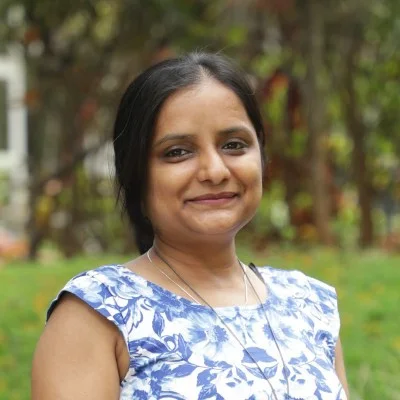
Reliable broadband can be hard to extend beyond major urban centres. Fibre networks require physical infrastructure, and laying cable may be difficult or expensive in some locations. Aerospace engineer Dr. Neha Satak saw a chance to apply advanced communication research to that problem. The October issue follows her journey from academic study to Astrome Technologies.
From aerospace research to Astrome
Satak studied aerospace engineering at the Indian Institute of Science and pursued doctoral research in the United States, according to the profile. At IISc she met Prasad H. L. Bhat, her future co-founder. In 2015 they established Astrome Technologies to develop communication systems that could serve practical connectivity needs. Building the company meant taking an idea beyond research and testing it against real network requirements.
Astrome's GigaMesh technology uses E-band wireless communication and electronic beam steering to create high-capacity links. It is designed to help operators expand coverage while reducing the need for extensive physical cabling. The company has explored telecommunications, enterprise and specialised government applications. The system's usefulness in any location depends on engineering conditions, licensing and network deployment.
The difficult path from prototype to network
The October feature reports that Astrome was recognised in the Indian Innovation Icons 2025 awards organised by the Marico Innovation Foundation. Recognition can open doors, but communications hardware also needs field testing, refinement, manufacturing and commercial partnerships. The profile frames that work as central to Astrome's development, rather than a footnote after the invention.
The point of a high-capacity link is not only a faster speed test. Schools, businesses and public services depend on connections that remain usable when demand rises. Astrome's work addresses one part of that wider infrastructure challenge. Its wireless route may help where fibre is difficult to lay, while deployment decisions still require attention to cost, coverage and local conditions.
Satak's story connects deep research with an everyday need: getting useful information and services to places that lack reliable connectivity. Read the October 2026 edition for her original profile.