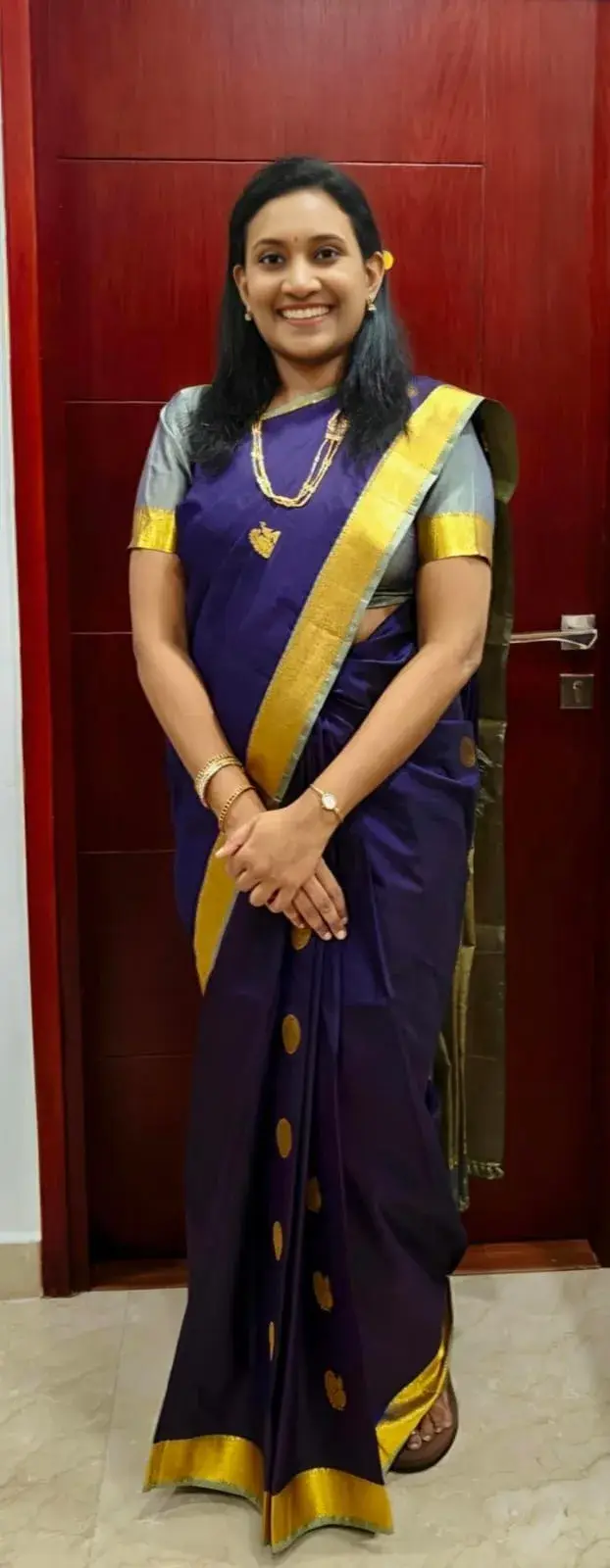
In a healthcare landscape that is only beginning to take the mind-body connection seriously, Rashmi Ethiraju has spent over 15 years building a practice at one of its most underserved intersections: the space where music meets therapy. As a certified music therapist, psychotherapist and counsellor, she uses sound — specifically, the structures and textures of Indian classical and folk music — as a clinical tool for healing, rehabilitation and emotional growth.
Music therapy in India remains a young discipline, often misunderstood as entertainment or relaxation rather than the structured, evidence-based clinical practice it actually is. Ethiraju's career has been dedicated to closing that gap — one session, one workshop, one awareness programme at a time.
Rooted in Carnatic Classical Music
Ethiraju's training in music began long before her entry into therapy. She has been trained in Carnatic classical vocal since childhood — a rigorous, raga-based system that demands discipline in pitch, rhythm and emotional expression. She later expanded her repertoire to include light music, folk music, playback singing and western vocal techniques.
This breadth of musical training is not incidental to her clinical work — it is central to it. Different therapeutic contexts demand different musical forms. A child with autism may respond to simple rhythmic patterns. An elderly patient with cognitive decline may be reached through a familiar film melody. A rehabilitation client working through trauma may need the meditative structure of a raga. Ethiraju's ability to draw from multiple musical traditions gives her a clinical toolkit that few therapists in India can match.
Training Under Dr Meenakshi Ravi
In 2009, Ethiraju approached the Meera Centre for Music Therapy Education and Research in Bangalore — one of India's pioneering institutions in the discipline — and began training under Dr Meenakshi Ravi. That relationship has continued for over 15 years, shaping the theoretical and clinical foundations of her practice.
She is certified by the NADA Centre for Music Therapy in New Delhi and holds an MS in Psychotherapy and Counselling, along with a Post Graduate Diploma in Special Education Needs. The combination of formal music therapy certification, psychotherapy training and special education qualifications gives her the cross-disciplinary grounding that music therapy — by its nature a field that sits between medicine, psychology and the arts — demands.
Clinical Practice Across Populations
The range of populations Ethiraju works with reflects the versatility of music therapy itself. She has provided therapeutic services to children and adults with autism, ADHD, dyslexia, Down's Syndrome, cerebral palsy, personality disorders, schizophrenia and bipolar disorders. She has also worked in geriatric care, using music to support elderly populations dealing with isolation, cognitive decline and emotional withdrawal.
Her institutional experience spans several organisations. She spent two years as a music therapist at the Richmond Fellowship Society, a rehabilitation centre for individuals with mental health conditions. She has worked with the Brindavan Education Trust, a centre for children with specific learning difficulties and dyslexia. At the Shankar Mahadevan Academy, she was a music teacher for the Joyful Choir — a band composed of autistic children. She has also worked with the Dignity Foundation, serving elderly populations.
Each of these roles required a different application of the same core discipline: using music not as performance but as a structured intervention designed to meet specific therapeutic goals — improving communication, building confidence, regulating emotion, or simply creating a safe space for expression.
Workshops, Conferences and Advocacy
Beyond her clinical practice, Ethiraju is active in the broader ecosystem of music therapy awareness and education in India. She has presented case studies and conducted workshops at conferences organised by the ASHA Foundation and the Indian Music Therapy Association (IMTA) in Hyderabad and Hubli. In 2016, she participated in a NADA Centre conference focused on music therapy in geriatric care. In 2017, she was interviewed by News India about the role of music therapy in mental health.
She has also contributed two chapters to the book 'Health and Harmony', authored by Dr Meenakshi Ravi — a publication that documents the clinical applications of music therapy in the Indian context. These contributions position her not just as a practitioner but as someone actively building the knowledge base of a discipline that India is still learning to recognise.
Recognition
In April 2022, Ethiraju received the Meera's Music Therapy Excellency Award from the Meera Centre for Music Therapy Education and Research — a recognition of her sustained contribution to the field. The award, coming from the institution where she trained, reflects both the depth of her practice and the trust of the community that shaped it.
For Ethiraju, recognition matters less as personal validation and more as a signal to the broader healthcare system that music therapy is a legitimate, effective and necessary clinical discipline. Every award, every conference presentation, every media interview is an opportunity to move the field closer to mainstream acceptance in India.
The Road Ahead
Music therapy in India is at an inflection point. The demand for mental health services has never been higher, the stigma around seeking help is slowly declining, and there is a growing recognition that wellness cannot be reduced to medication and talk therapy alone. In this landscape, practitioners like Ethiraju — who combine clinical rigour with deep musical training and genuine empathy — are building the infrastructure for a discipline that could serve millions.
Music, as she has put it, is not simply about performance. It can be a safe space to express, connect, heal and grow. For Ethiraju, that belief is not a philosophy — it is a daily practice, refined over 15 years of working with people at their most vulnerable, using melody and rhythm as the tools that reach where words cannot.
Sources and editorial references
This profile draws on independently verified public sources. Claims have been cross-referenced where possible.
- TrySecondOpinion — Ms Rashmi Ethiraju, Certified Music Therapist: trysecondopinion.com
- YouTube — Music therapy for elderly by Rashmi Ethiraju: youtube.com
- NADA Centre for Music Therapy, New Delhi: nada.in
- Meera Centre for Music Therapy Education and Research, Bangalore: meeramusictherapy.in
- Notion Press — Health and Harmony by Dr Meenakshi Ravi: notionpress.com
- Global Cover Story feature — Dr Rashmi Ethiraju (LinkedIn, August 2026)