
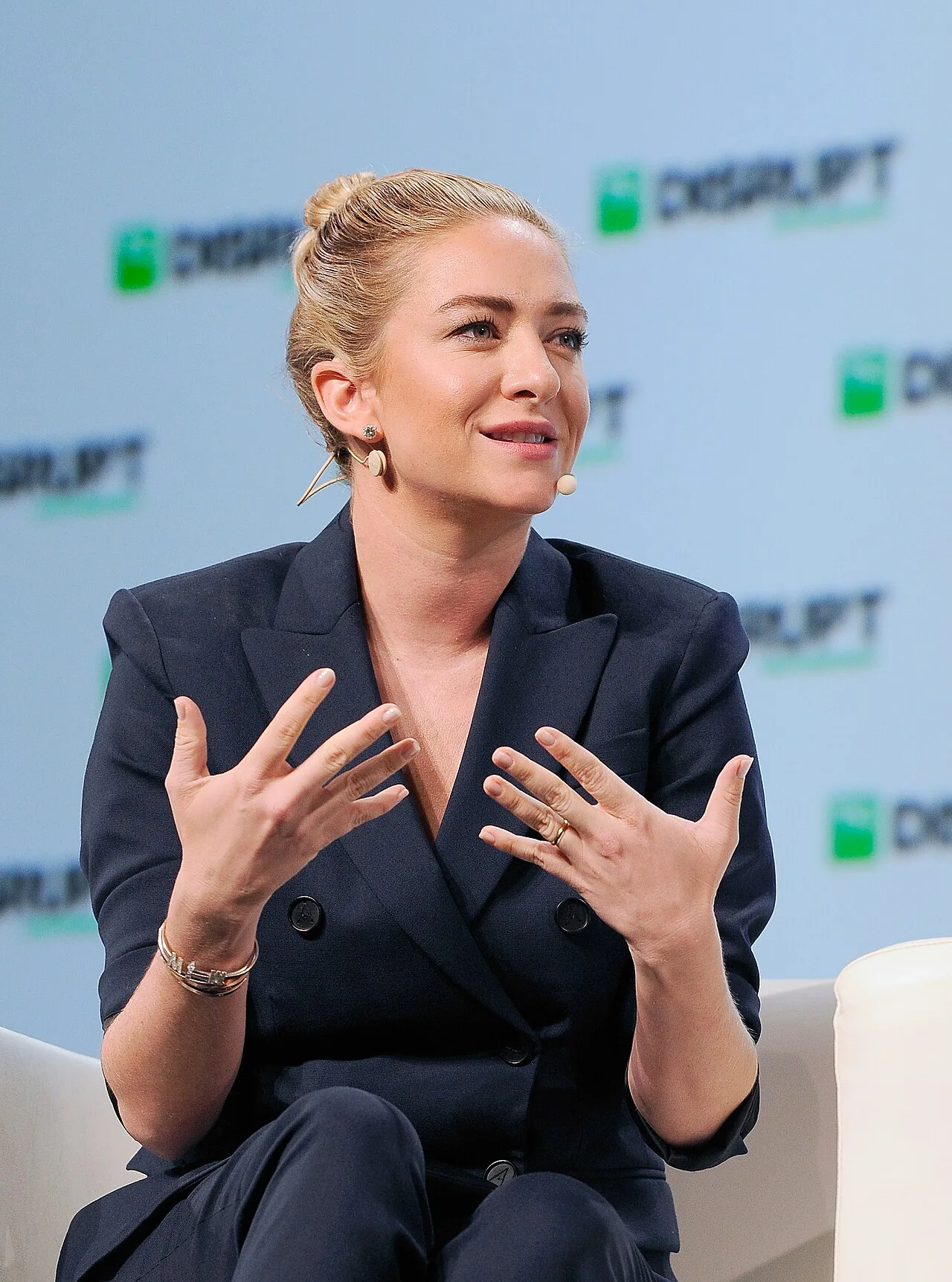
One rule built the company. Whitney Wolfe Herd founded Bumble in 2014 on the premise that in heterosexual matches, women message first — a product decision that was also an argument about who holds power and who feels safe online.
It worked well enough to make Bumble a major dating platform, and the idea stretched into networking and friendship. The brand was built on empowerment, and a very large user base decided they believed it.
She turned a single product rule — women message first — into a company and a statement.
The 2021 listing made her one of the youngest women ever to take a company public in the United States. In an industry where female founders rarely reach that scale at all, the milestone got noticed well outside technology.
What her story became is a reference point — for consumer products built around a mission rather than bolted onto one, and for women running technology companies on terms they set themselves. Public markets have applied their usual pressure since. The original rule has not moved.
Before Bumble, Wolfe Herd was a co-founder and vice-president of marketing at Tinder. She left in 2014 and filed a sexual harassment lawsuit against the company and its parent, which was settled without an admission of wrongdoing. She then launched Bumble with backing from Andrey Andreev, founder of the European dating app Badoo.
In 2019 the private equity firm Blackstone bought a majority stake, and Wolfe Herd became chief executive of the combined company, which also owned Badoo. She has campaigned on online safety, including backing a 2019 Texas law that made sending unsolicited explicit images an offence. Bumble listed on Nasdaq in February 2021.
She stepped down as chief executive in early 2024, staying on as executive chair, and returned to the role in March 2025 as the company tried to revive slowing user growth. Bumble cut a large share of its workforce that year and refocused on the quality of matches rather than their volume.