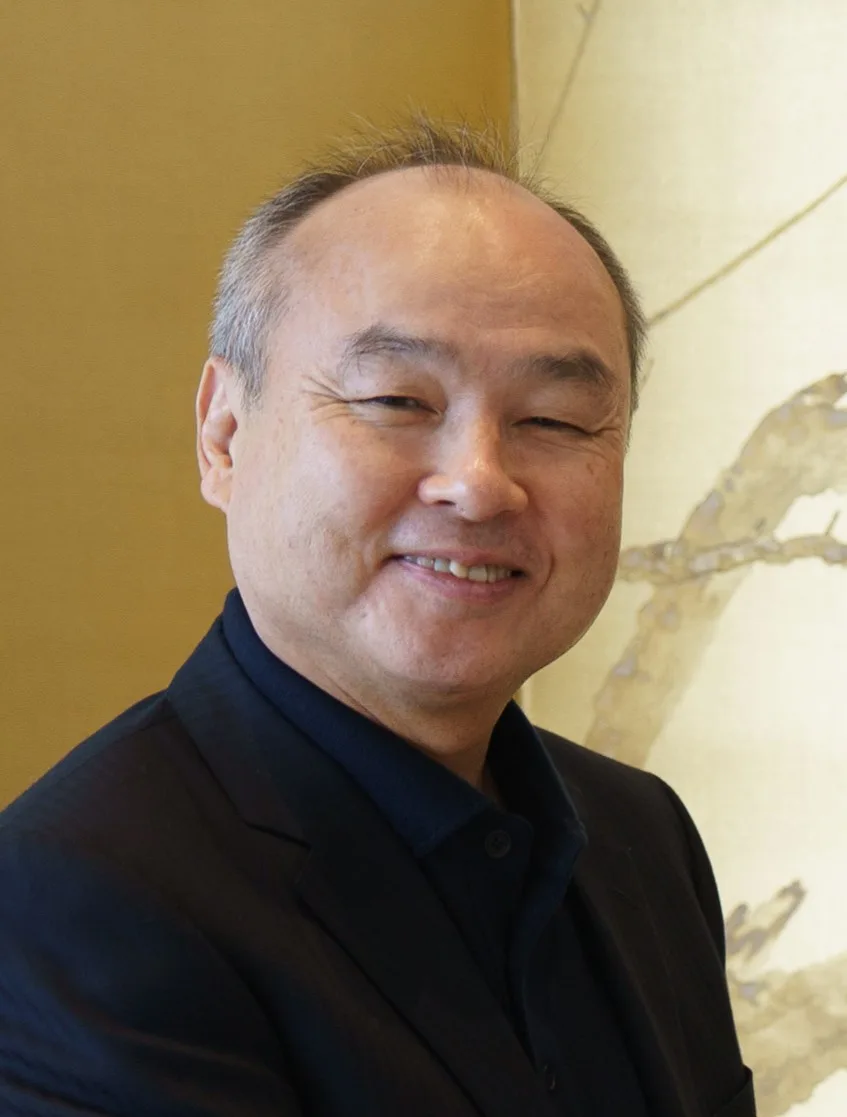
Masayoshi Son founded SoftBank and spent the next few decades making the largest, least hedged bets in technology. Computing, connectivity, now artificial intelligence — always with conviction, rarely with a fallback.
One of them was Alibaba, an early cheque that turned into among the most profitable venture investments ever made. That single win funded the ambition that followed, and the ambition was the Vision Fund, which pushed sums into private startups that nobody had attempted before.
He does not invest in companies so much as in his own conviction about the future — for better and worse.
What followed was violent in both directions. Some holdings soared. Others failed publicly and expensively, and the losses forced a genuine reckoning about what happens when that much capital lands on companies too young to absorb it.
He has not changed. The appetite for scale is intact and so is the conviction that an AI-driven transformation is arriving. Few investors have shaped the startup economy this much, shaken it this hard, or split opinion so completely.
Son, who is of Korean descent, grew up in Tosu on the Japanese island of Kyushu and moved to California as a teenager. While studying economics at the University of California, Berkeley, he sold the rights to an electronic translator he had helped develop to Sharp. He founded SoftBank in 1981 as a distributor of personal-computer software.
The first great bet was the internet. SoftBank invested early in Yahoo and lost much of its paper fortune in the dot-com crash, then rebuilt through telecoms, buying Vodafone's Japanese mobile business in 2006 and becoming the first carrier to sell the iPhone in Japan. In 2016 it bought the British chip designer Arm for about 32 billion dollars. Arm returned to public markets in 2023 and has become central to the group's AI strategy.
The Vision Fund, launched in 2017 with a large commitment from Saudi Arabia's Public Investment Fund, put money into companies such as Uber and DoorDash and the Indian start-ups Paytm, Ola and Oyo. Its investment in WeWork, which went bankrupt in 2023, became the emblem of its mistakes. Son has since tied SoftBank's future to AI, including the Stargate data-centre venture announced with OpenAI and Oracle in 2025.