
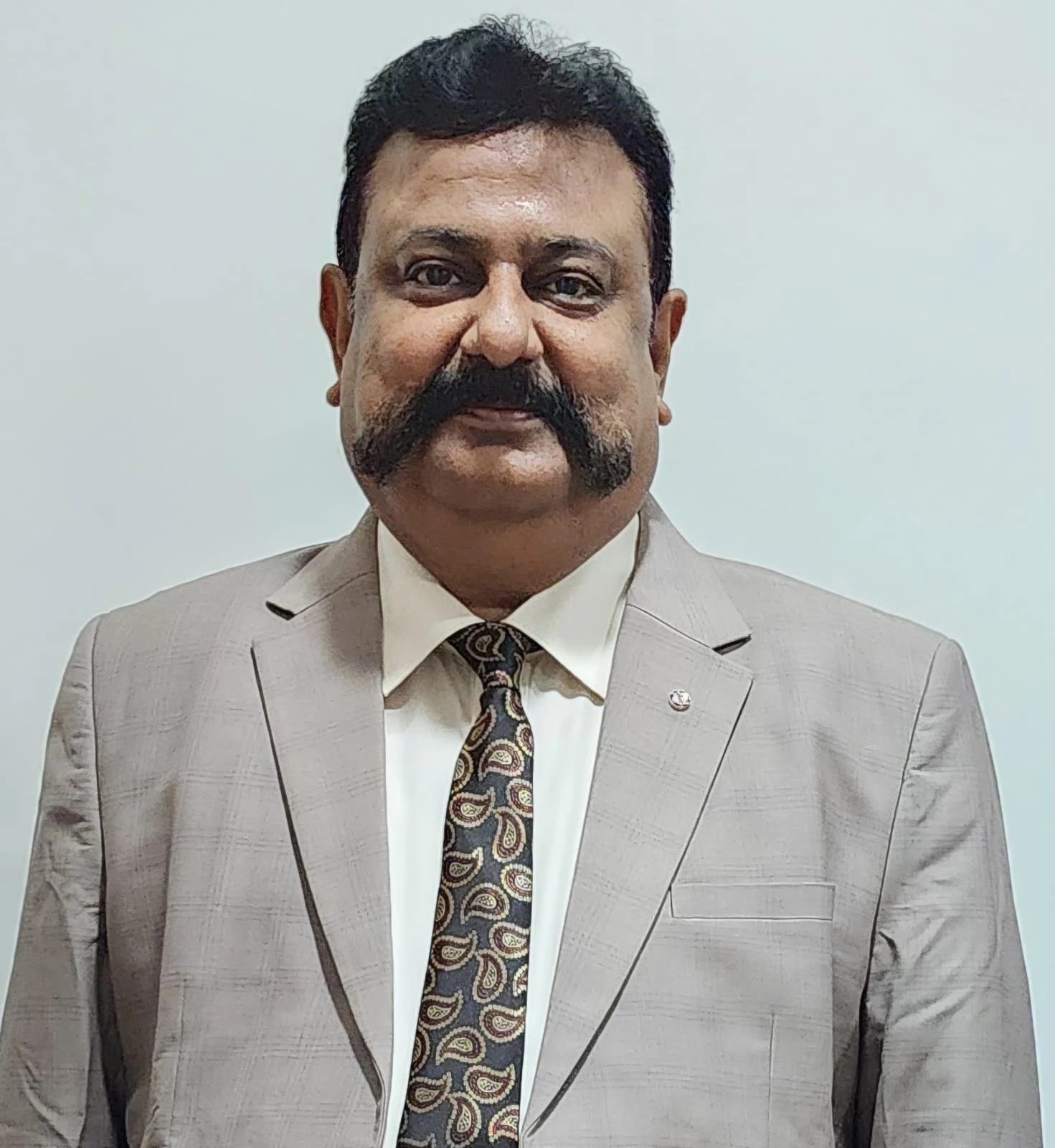
Standing in 2026, when the conversation turns to healthcare and wellness, a recurring question is how much Ayurveda genuinely contributes to the modern healthcare system. For Dr. Partha Narayan Joardar, who has spent more than three decades moving between the Allopathy and Ayurveda sides of India's healthcare industry, the answer has become clearer with each passing year: people's trust in Ayurveda is rising sharply, both across India and internationally — and in 2026, Ayurveda is no longer seen as an alternative to modern science, but as its complement.
Three decades between Allopathy and Ayurveda
Dr. Joardar's career began at a junior level in healthcare sales and built, over 35-plus years, into senior sales and marketing leadership roles spanning both the Allopathy and Ayurveda sectors — including a Vice President, Healthcare (Sales & Marketing) role built largely around Mumbai's pharmaceutical and wellness industry. His academic grounding from IIM Calcutta and XLRI Jamshedpur shaped the business-growth strategy and organisational development work that ran alongside his sales career. He now serves as Additional Chief Manager – Marketing at Arya Vaidya Sala Kottakkal in Kerala — a more than century-old Ayurveda institution he points to as an example of how long-term trust, not short-term marketing, sustains an Ayurveda brand.
That continuity between a conventional pharmaceutical sales career and a classical Ayurveda institution is itself part of his argument: Dr. Joardar has said his ongoing focus is a holistic approach combining Naturopathy, Yoga and Meditation as an additional, complementary way of addressing chronic illness — not a replacement for the conventional healthcare system he spent decades inside.
Why trust in Ayurveda is growing
In Dr. Joardar's reading, the single biggest driver is a shift in what people expect from healthcare after COVID-19 — away from cure-only medicine and toward prevention, immunity, gut health, stress management and sleep. That is precisely where classical Ayurveda has always positioned itself, through concepts like Dinacharya (daily routine) and Ritucharya (seasonal routine), diet and lifestyle guidance, and well-known herbs such as Amla and Ashwagandha. Products like Chyawanprash, he notes, have moved from a niche remedy to a daily household staple for exactly that reason.
In 2026, Ayurveda is no longer seen as an alternative to modern science, but as a complement.
Integration, not competition
Asked how Ayurveda holds up against modern science, Dr. Joardar's answer is consistent: it works best in integration, not opposition. Modern medicine remains indispensable for emergencies, surgery and acute infection; Ayurveda is better suited to lifestyle disorders, digestion, immunity, chronic stress and long-term wellness. The more constructive future, in his view, is not an Ayurveda-versus-Allopathy debate but a growing number of integrative clinics that draw on both systems for what each does best.
He extends the same integration logic to the people who will build Ayurveda's next phase. Doctors and Vaidyas, he argues, will see strong demand — but mainly those who combine classical training with contemporary healthcare awareness, careful documentation and digital consultation skills. For manufacturers and sellers, the deciding factor won't be marketing spend but quality, standardisation, lab testing and authentic sourcing; century-old institutions like Kottakkal, he points out, survived specifically because they built that trust, and newer Ayurveda brands will have to prove the same discipline to last.
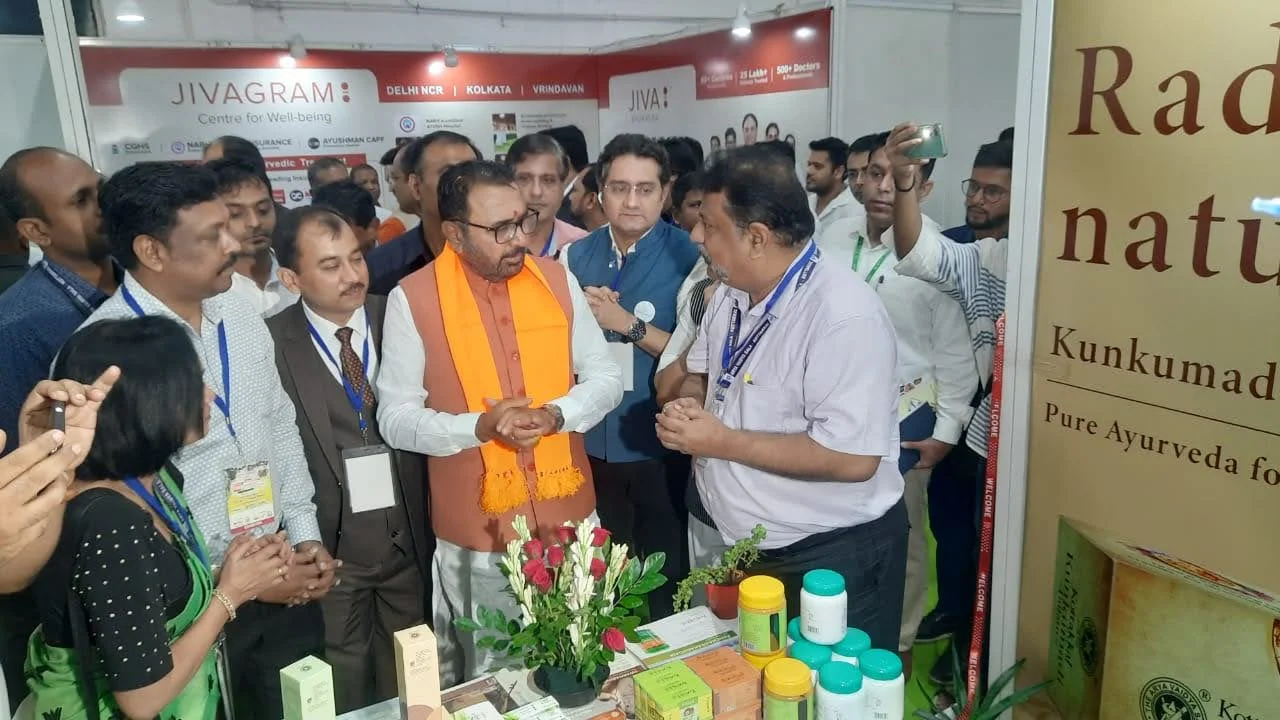
What Panchakarma actually is — and isn't
Panchakarma — literally "five actions" — is the set of classical Ayurvedic cleansing procedures that Dr. Joardar considers especially relevant to today's lifestyle-disorder landscape: fatty liver, acidity, IBS, PCOS, back pain, insomnia, anxiety, obesity and diabetes, conditions he attributes to years of accumulated Ama (metabolic toxins) and dosha imbalance rather than infection. Where medicine alone often manages the symptom, he describes Panchakarma's intent as a deeper, full-system reset for the gut, liver, hormones and nervous system — which is why, in his observation, people increasingly undertake it once or twice a year as preventive maintenance rather than only when unwell.
| Therapy | Dosha / Focus | Commonly Indicated For |
|---|---|---|
| Vamana | Kapha | Chronic cough, asthma, skin issues, obesity |
| Virechana | Pitta | Acidity, liver issues, skin allergies, piles |
| Basti | Vata | Constipation, back pain, joint pain, PCOS, stress, insomnia |
| Nasya | Head region | Migraine, sinus, hair fall, sleep issues, mental clarity |
| Raktamokshana | Blood-related | Chronic skin conditions (now typically controlled leech therapy) |
Dr. Joardar is emphatic on one point: Panchakarma is a medical procedure, not a spa treatment or a one-size-fits-all wellness package. A qualified Vaidya needs to assess an individual's Prakriti (constitution) and specific disorder before deciding which one or two karmas are appropriate, typically alongside Purvakarma (preparatory oiling and sweating) and Paschatkarma (post-treatment diet and lifestyle guidance). For general yearly wellness rather than a specific condition, he points to a common combination — Abhyanga (oil massage), Swedana (steam), Basti, Nasya and a short period of light diet — but stresses that this should still happen only under an experienced Ayurvedic doctor at a reputable centre.
Meditation alongside the body's cleansing
Where Panchakarma cleanses the body, Dr. Joardar argues meditation cleanses the mind — and without it, accumulated stress simply recreates the Ama that Panchakarma just removed. It's a pairing Ayurveda has always framed as Shodhana (purifying the body) alongside Shamana (calming the mind). Alongside Panchakarma, he recommends pairing specific meditation techniques with specific conditions: mindful breathing (Anapana) for acidity and anxiety, Yoga Nidra for insomnia and hormonal conditions following Basti, candle-gazing (Tratak) for migraine and focus following Nasya, alternate-nostril breathing (Nadi Shodhana) for liver and Pitta-related conditions following Virechana, and loving-kindness meditation for chronic pain and emotional eating tied to cortisol.
The scale of India's AYUSH sector
Dr. Joardar's career has run roughly parallel to the Indian government's own institutional embrace of Ayurveda and allied systems. What began in March 1995 as the Department of Indian Systems of Medicine and Homoeopathy under the P.V. Narasimha Rao government was renamed the Department of AYUSH in November 2003, before being upgraded into a full, independent Ministry of AYUSH on 9 November 2014. The scale that ministry now oversees is substantial.
| Metric | Figure |
|---|---|
| AYUSH colleges | 1,000+ (Ayurveda: 541, Homoeopathy: 277, Unani: 58, Siddha: 17, Yoga & Naturopathy: 71, Sowa-Rigpa: 7) |
| National Institutes | 12 (incl. NIA Jaipur, AIIA Delhi) |
| Standalone govt. AYUSH hospitals / dispensaries | 3,986 hospitals / 27,199 dispensaries |
| Co-located facilities under National Health Mission | 13,249 facilities with 25,322 AYUSH doctors deployed |
| Ayushman Arogya Mandir (AYUSH) centres | 12,500 upgraded dispensaries/sub-centres |
| Registered AYUSH practitioners nationwide | 7,51,768 |
The current Union Minister of State (Independent Charge) for AYUSH is Shri Prataprao Ganpatrao Jadhav, who has held the portfolio since June 2024, with Vaidya Rajesh Kotecha serving as Secretary — continuing a ministry whose institutional footprint, Dr. Joardar notes, has expanded enormously since the first dedicated AYUSH minister, Shri Shripad Yesso Naik, held the role between 2014 and 2021.
Carrying Ayurveda onto an international stage
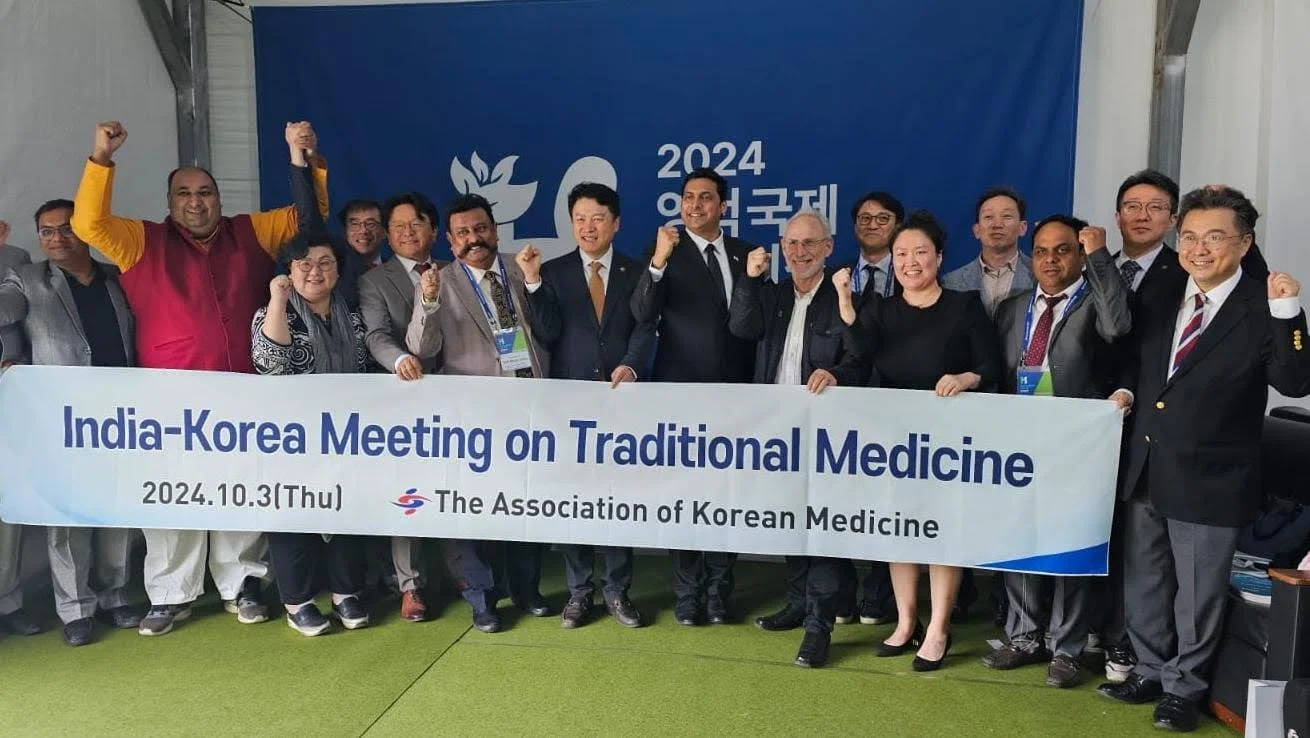
Dr. Joardar's engagement with Ayurveda and integrative wellness has extended beyond India's borders. He has represented the sector at the India-Korea Meeting on Traditional Medicine, hosted alongside the Yeongdeok International Wellness Festa by the Association of Korean Medicine, bringing Indian Ayurvedic perspectives into dialogue with Korea's own traditional-medicine establishment. That kind of cross-border exchange reflects a broader pattern in the AYUSH sector's recent growth — Ayurveda's international visibility rising alongside India's own institutional investment in traditional medicine, which has in turn opened space for direct practitioner-to-practitioner exchange between countries with their own long-standing traditional health systems.
Recognition
Across his healthcare and AYUSH-sector career, Dr. Joardar has received recognition from several industry and civic bodies, including an honorary doctorate in healthcare conferred in a ceremony linked to the Ministry of Corporate Affairs, Government of India, as well as the Maha AYUSH Purashkar, AYUSH Gaurav Sammaan, Ayurveda Bhushan Award, Banga Gaurav Sammaan and Bharat Gaurav Ratna Shri Sammaan. He has also been profiled as a featured healthcare leader in multiple business and lifestyle magazines, and continues to be an active Yoga Volunteer under AYUSH and a member of NASYA (the National Integrated Medical Association's Yoga wing).
Sources and editorial references
This profile is based on a self-submitted account, an authored feature on Ayurveda, Panchakarma and meditation provided by Dr. Partha Narayan Joardar for editorial feature (originally prepared for London Herald magazine), and photographs documenting his career and public engagements. AYUSH sector statistics are drawn from the Ministry of AYUSH / Press Information Bureau data cited in that material and have not been independently re-verified by Global Cover Story. Career history, awards and professional titles reflect the subject's own account and prior published profiles, and have not been independently verified against institutional or government records.